Horology atelier
What light reveals on the wrist
Explore how mechanical and quartz movements keep time, how case profiles frame a dial, and how indices, lume, leather, and steel change the character of what you wear every day.
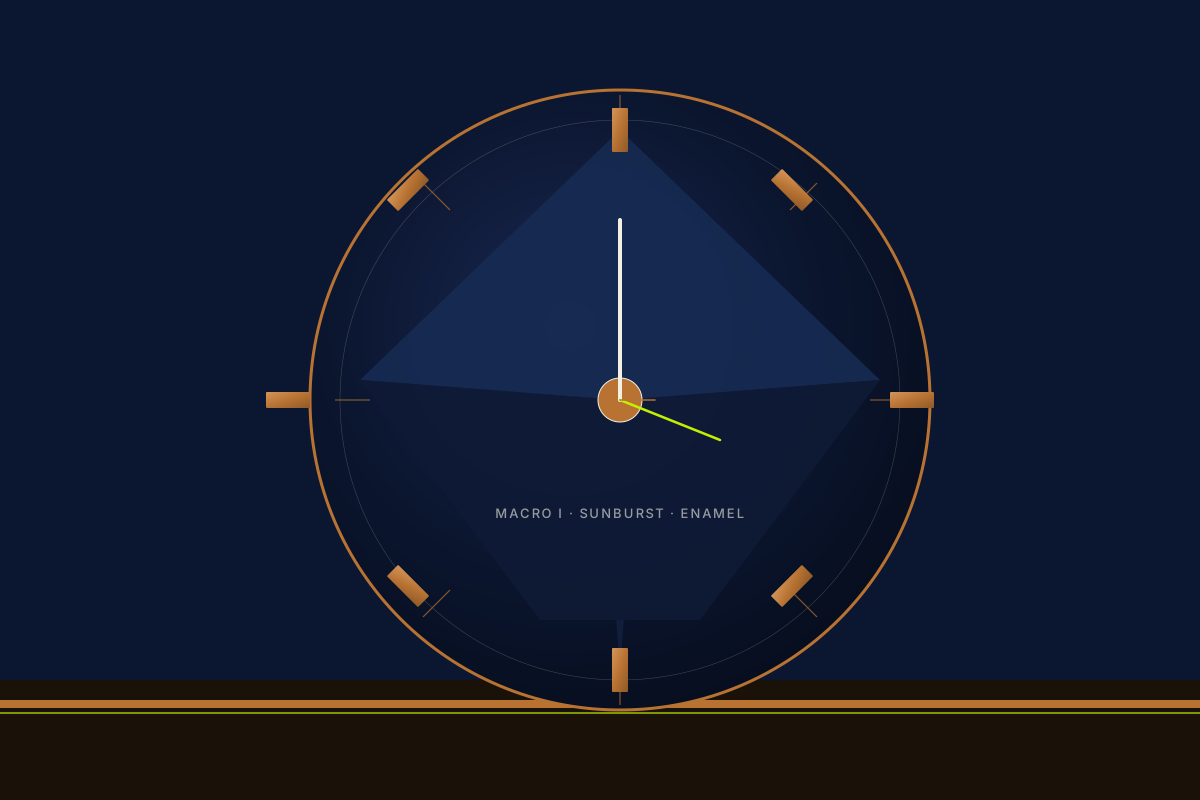
Macro texture — sunburst enamel, copper indices, and the quiet chartreuse second trace sketch how legibility becomes atmosphere on a midnight field.
Where to begin
Five places to start
Mechanical
Movement families, escapement rhythm, and the gear trains you can study through a display back.
Quartz
Battery-powered oscillators, stepping seconds, and dial clarity at a glance.
Case shapes
Round, cushion, tonneau, and rectangular silhouettes and how they sit visually.
Care notes
Storage, magnetism, water resistance nuance, and everyday timekeeping context.
At the workbench
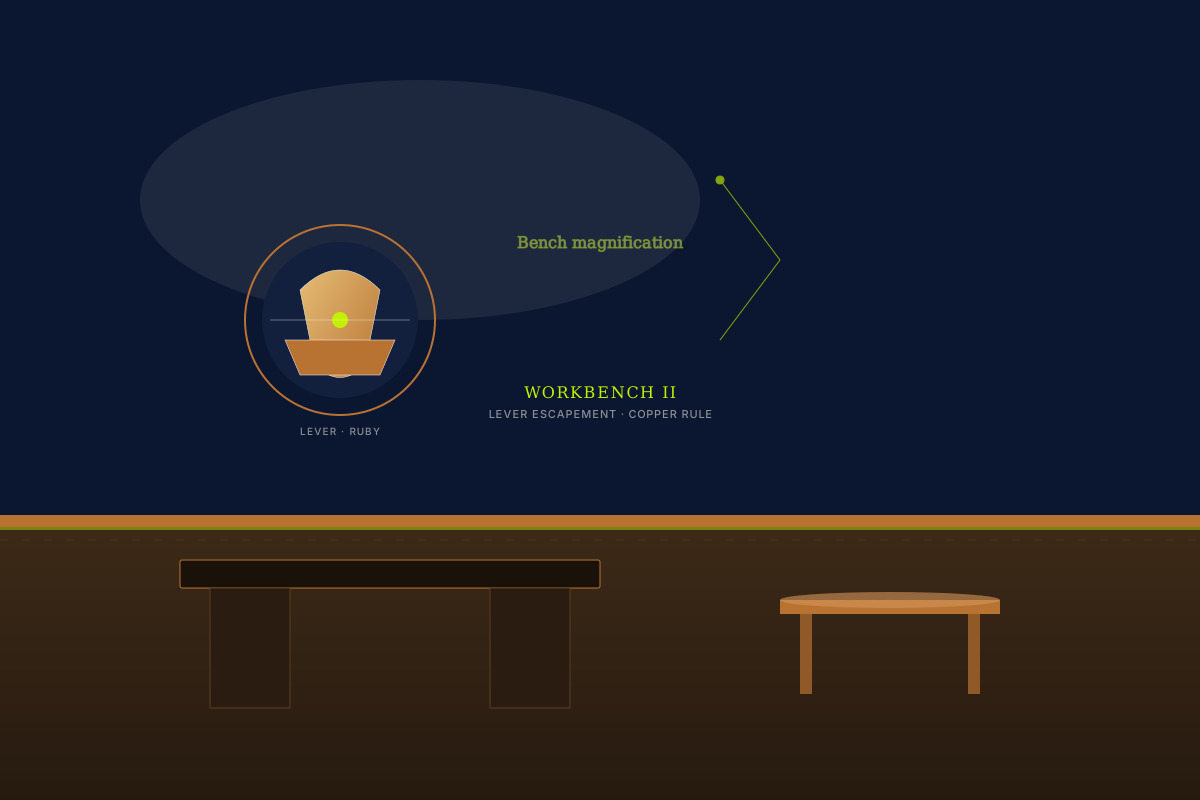
Watchmakers align parts along straight brass rules and warm task light. Those same copper lines and deep ivory margins show up in how we frame escapements, cases, and macro dial studies.
Reading the escapement
The lever, jewels, and banking pins reward slow looking — each impulse and rest beat explains why mechanical time feels tactile rather than instantaneous.
Strap geometry
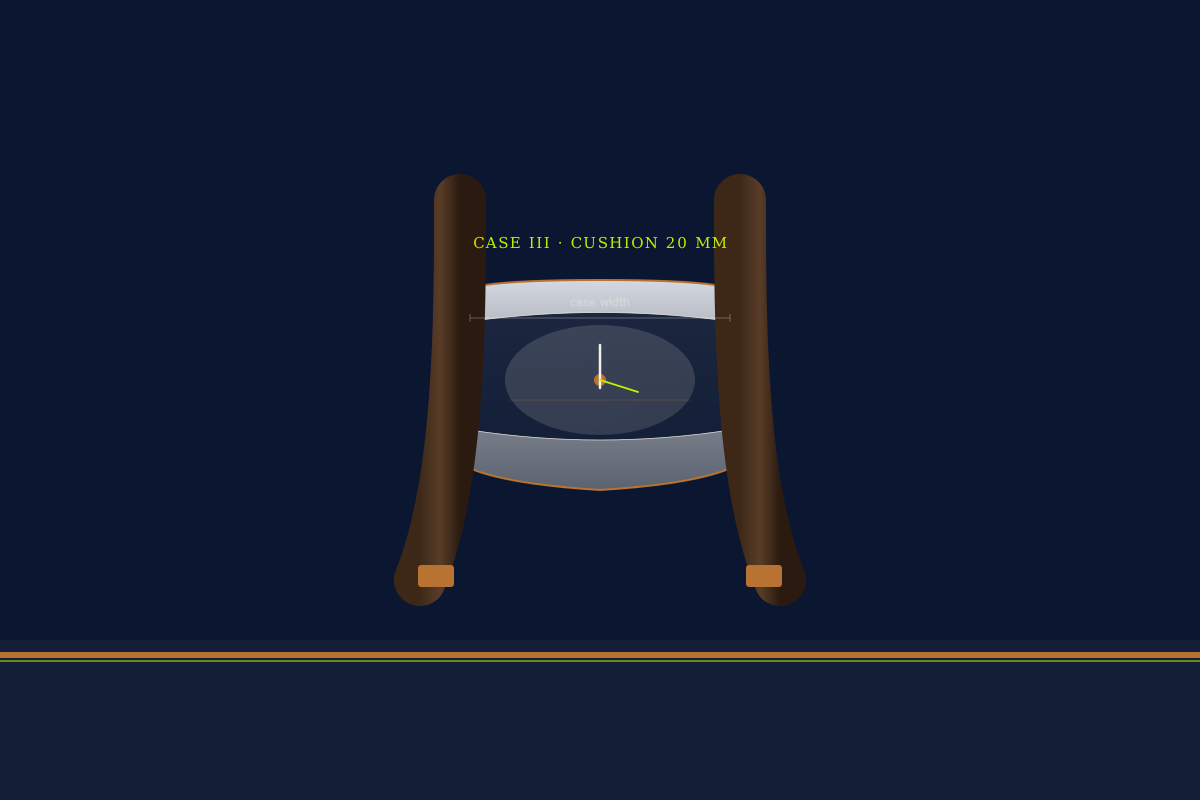
Lug width and case profile change how a dial presents on the wrist. Cushion curves soften edges; angular lugs sharpen the frame.
Dial and strap finishes
Applied indices, luminous plots, sunburst enamel, grained leather, and brushed mid-links each catch light differently. Comparing those surfaces is how you learn what reads quickly on the wrist and what feels deliberate up close.
Legibility first
- Contrast — Light hands on deep dials, or dark indices on ivory enamel.
- Scale — Chapter rings and rehaut depth change how minute marks read.
- Material — Brushed, polished, and grained surfaces catch light differently.